
Channel Strategy Starts With The Buyer
It is easy to fall in love with a piece of marketing content or a campaign before asking — or revisiting — the less exciting question at the heart of channel strategy: Who exactly needs to see it, and where?
I care deeply about the story, the writing, the look-and-feel, and the clarity of finished work. But even excellent content can disappear if it is aimed at a broad audience or distributed where real customers rarely visit. Before deciding what to make, we want to know who we need to reach, what they are trying to solve, how they go about finding a solution, and which sources they trust along the way.
That is the work of developing an ideal customer profile, or ICP. It is a working hypothesis about fit and timing, not just a slide with a company size, an industry, and a job title.
A useful ICP defines the accounts most likely to benefit from what you offer and buy it, the conditions that make them ready to act, and the people involved — and who are on the line — for the decision. What event turns a known problem into a funded priority? Who lives with it? Who owns the budget? Who might recommend a solution even though they won’t sign the contract? And what risk makes them hesitate?
For a tech company, those questions can reveal a gap between the person who likes the product and the person who pays for it. An engineer may immediately understand a sophisticated platform. A VP of operations may need to see how it cuts downtime, reduces risk, or helps a team do more with less. The user, technical evaluator, buyer, and a potential blocker may all need different proof. Reaching only one can produce interest without a sale.
I start by listening to founders, sales teams, current customers, prospects who said no, and the language people use when they describe the problem in their own words. Then we can cross-check those conversations against CRM win/loss patterns, search queries, site conversion data, competitor claims, and recurring sales objections. The aim is to separate what we assume about buyers from what they repeatedly show us. You may not be able to do everything on this list but you should engage with your teammates to do most of it. Only then is the content created. And, it’s not creation by committee but just better inputs before you build. It’s like researching Lincoln before making a documentary about — Lincoln.
Then comes a question that sounds self-evident but is often skipped: Where are these people when they are ready to learn, compare, and buy?
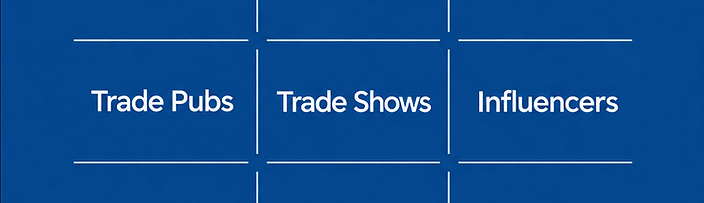
A buyer searching for a specific technical fix may be reachable through high-intent search: that is demand we can capture if we’re willing to pay the going rate. If the category is new and few people know to search for it, the job may be to create demand through targeted LinkedIn or Meta distribution, an industry publication, a relevant event, or direct outreach. Their technical colleagues may spend time somewhere else entirely. Channel selection depends on buyer behavior, the stage of the decision, and which voices the buying committee trusts.
This is where research becomes a testable plan. For each promising channel, state a hypothesis: this audience, facing this trigger, will respond to this message and offer. Set a clear conversion path and record campaign sources in the CRM. Agree with sales on what counts as a qualified opportunity and establish a baseline before spending commences. Then follow the path from qualified visit to conversation, opportunity, and ultimately revenue. What does each qualified opportunity cost? Where do prospects drop out? Those answers tell us whether to improve the audience targeting, message, offer, or page.
The first pass will not always be right. A channel may produce inexpensive clicks and no serious buyers. A quieter one may generate fewer visits and better conversations. Before declaring a channel a failure, test whether the offer or message was the problem, or was it something else. Small samples can point us somewhere useful; they rarely justify certainty. We learn, adjust, and test again.
None of this diminishes content. It actually amplifies its impact.
Strong content shows that you understand the customer’s problem and offers a credible way forward. Early on, it may help them name the problem. Later, a comparison, demo, or customer story may help a buyer or buying committee evaluate the solution and reduce perceived risk. The research gives that work its aim. Customer proof gives it weight. Distribution puts it in the path of the people who can act on it.
I enjoy finding the story inside a complex product and making it compelling. I also want to know whether the right people saw it, understood it, and did something because of it. That is where creative judgment and marketing discipline meet.
Content is king but first, find your people. Know where they are. Then make something worth their attention, and learn whether that attention becomes pipeline, customers, and growth. And then iterate methodically until you reach your goals. And repeat.


